Kidney Cancer
Evaluation and treatment of kidney tumors using active surveillance, robotic partial nephrectomy, radical nephrectomy and other individualized treatment options.

Advanced diagnosis and treatment of kidney, prostate, bladder, urinary tract and male reproductive system disorders using minimally invasive and robotic-assisted surgical techniques.
Our platform helps international patients access experienced urology specialists, advanced diagnostic technologies, minimally invasive procedures and robotic-assisted surgery.
Comprehensive review of medical reports, imaging studies, laboratory tests and previous treatment history.
Robotic-assisted procedures for selected prostate, kidney, bladder and reconstructive urology cases.
MRI, CT, ultrasound, cystoscopy, pathology review, urodynamic testing and laboratory evaluation.
Medical opinion coordination, appointment planning, translation, travel assistance and follow-up.
Our urology specialists diagnose and manage a wide range of conditions affecting the kidneys, ureters, bladder, prostate, urethra and male reproductive system.
Evaluation and treatment of kidney tumors using active surveillance, robotic partial nephrectomy, radical nephrectomy and other individualized treatment options.
Comprehensive prostate cancer evaluation including PSA testing, prostate MRI, biopsy review, robotic radical prostatectomy and multidisciplinary treatment planning.
Treatment of enlarged prostate causing weak urinary flow, frequent urination, nocturia, incomplete bladder emptying and urinary retention.
Medical and surgical treatment of kidney and ureter stones using SWL, ureteroscopy, RIRS, PCNL and other minimally invasive stone procedures.
Diagnosis and treatment including cystoscopy, TURBT, intravesical therapy, robotic cystectomy, urinary diversion and oncology follow-up.
Evaluation and management of bladder control problems through pelvic floor rehabilitation, medication, injection therapies, sling procedures and reconstructive treatment.
Investigation of male infertility through semen analysis, hormone tests, genetic assessment, ultrasound and sperm retrieval procedures such as TESE.
Personalized evaluation and treatment using medication, injection therapy, vacuum devices, hormonal assessment and penile prosthesis surgery when appropriate.
Treatment of urethral narrowing through dilation, endoscopic urethrotomy, urethroplasty and complex reconstructive surgery.
Evaluation and treatment of UPJ obstruction, vesicoureteral reflux, hypospadias and congenital kidney or urinary tract abnormalities.
Investigation of recurrent urinary tract infections through urine culture, imaging, cystoscopy and assessment of underlying anatomical or functional problems.
Management of bladder dysfunction associated with spinal cord injury, multiple sclerosis, Parkinson's disease, stroke and other neurological disorders.
Robotic-assisted surgery may provide enhanced visualization, precise instrument control and minimally invasive treatment for selected urological conditions.
Minimally invasive removal of the prostate for selected prostate cancer patients with attention to cancer control and preservation of surrounding structures.
Kidney-sparing removal of selected kidney tumors while preserving as much healthy kidney tissue as possible.
Robotic removal of the kidney in selected complex tumors when kidney-preserving surgery is not appropriate.
Robotic removal of the bladder for selected bladder cancer patients, with urinary reconstruction when medically indicated.
Reconstruction of the connection between the kidney and ureter in patients with ureteropelvic junction obstruction.
Repair of selected ureteral strictures, injuries and complex urinary tract reconstruction cases.
Minimally invasive removal of selected adrenal tumors after endocrinological and surgical evaluation.
Smaller incisions, reduced blood loss, improved precision, shorter hospitalization and faster recovery in selected patients.
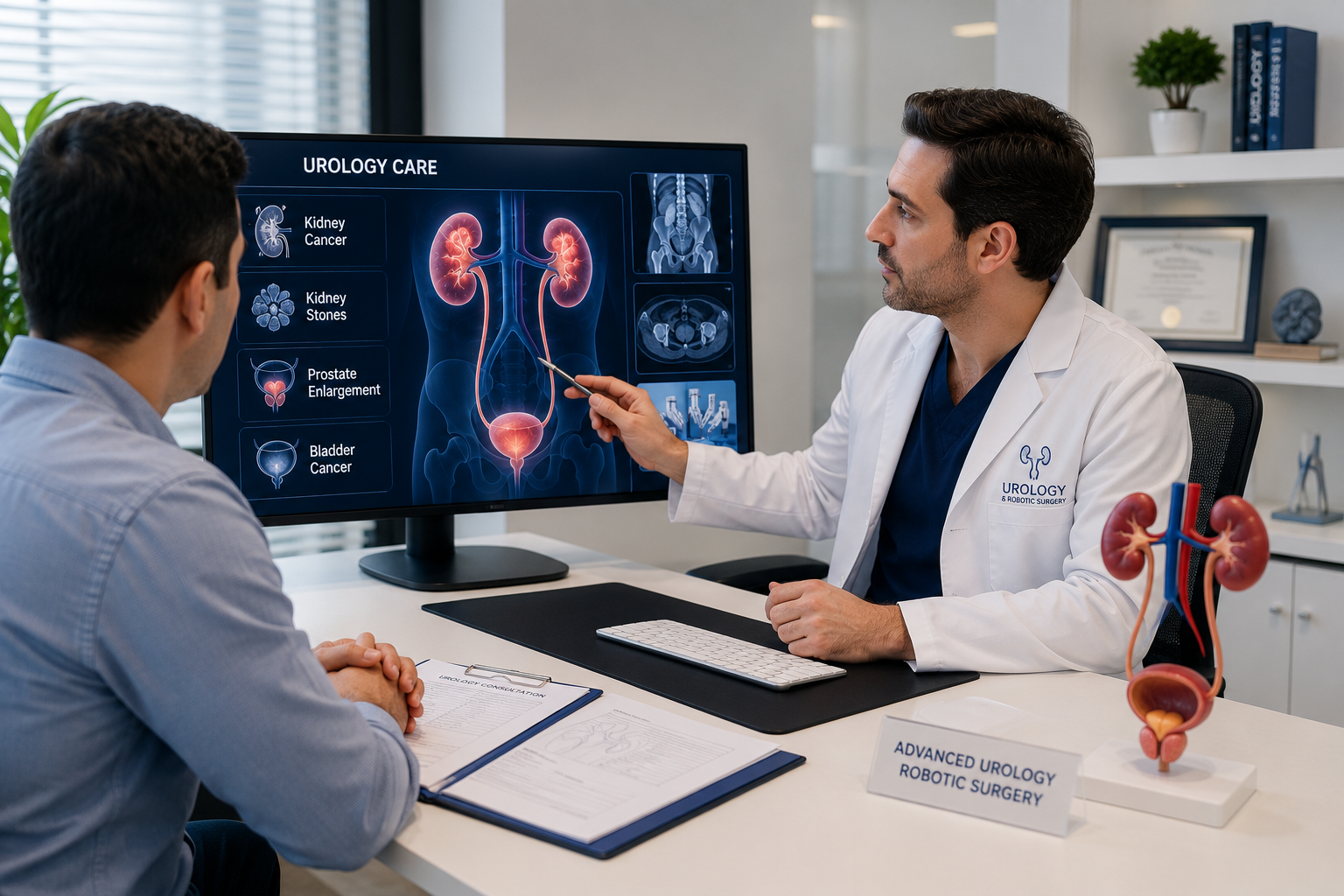
Patients diagnosed with kidney cancer, prostate cancer, bladder cancer, kidney stones, enlarged prostate, urinary obstruction, incontinence, male infertility, erectile dysfunction or complex urinary tract disorders may apply for specialist evaluation.
Final treatment recommendations depend on the patient's diagnosis, disease stage, clinical condition, imaging results, laboratory findings, pathology and previous treatments.
Submit Medical ReportsPlease prepare the following documents for a complete urological evaluation.
Diagnosis, symptoms, current condition, previous treatments and relevant medical history.
CT, MRI, ultrasound, PET/CT and other available imaging reports and original image files.
PSA, kidney function tests, urinalysis, urine culture, blood counts and relevant biochemical results.
Biopsy results, pathology reports, molecular tests and previous operation reports if available.

Patients can securely submit their medical reports, laboratory results, CT scans, MRI files, pathology reports and previous treatment history for initial case organization and specialist review.
Our team supports medical opinion coordination, appointment scheduling, travel planning, interpreter services, hospital arrangements and post-treatment follow-up.
Request Medical OpinionRobotic surgery is not suitable for every patient. Final eligibility and treatment planning must be determined by a qualified urology specialist after complete medical evaluation and review of all clinical information.
Send your medical reports and receive a specialist opinion and personalized treatment plan.